
BENNETTS ORIGIN REPORT
17 June, 2026
Find out the latest news from PAPUA NEW GUINEA!
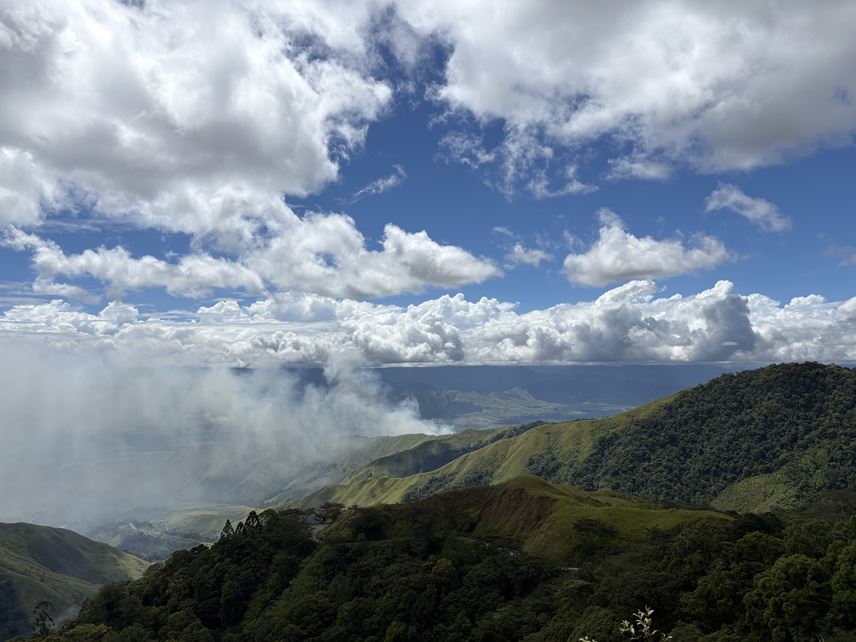
Welcome to our June origin report! Last month, members of our trading team, Julian and Aislinn, visited Papua New Guinea - the first time Bennetts have been on the ground since 2018. The team travelled through the country’s stunning highlands from Mt Hagen, onto Goroka and finally down to the coast to visit the main port, Lae. Their goal was to reconnect with our supply partners, see how the country’s supply chain has evolved and gain firsthand insights into this key origin. Beautiful Landscape
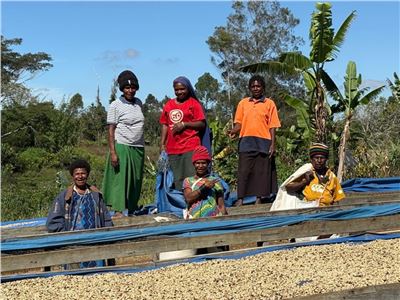
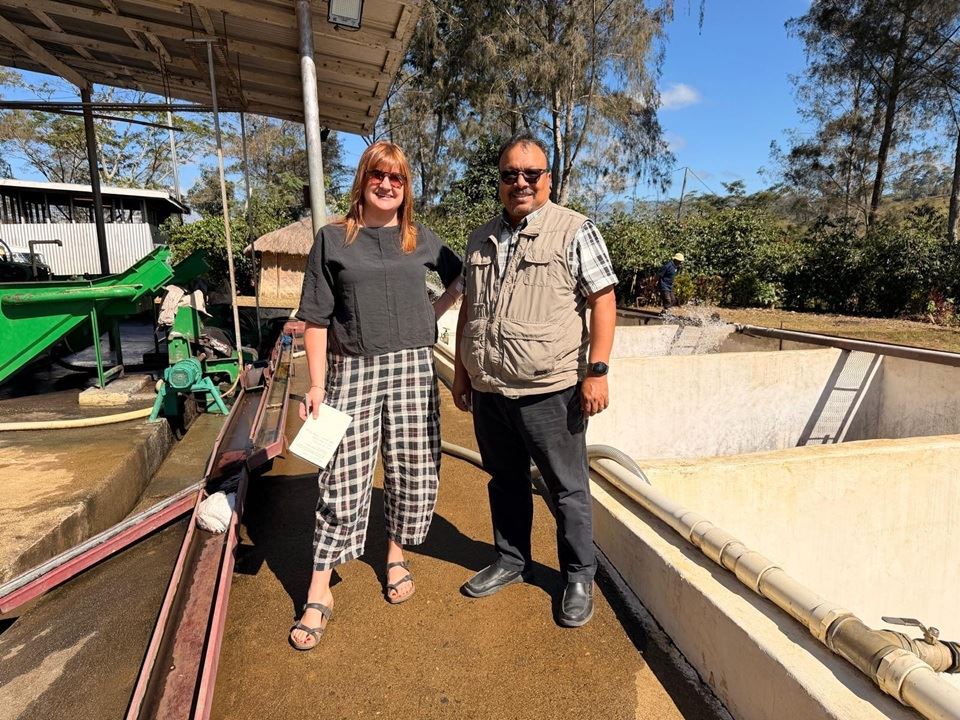
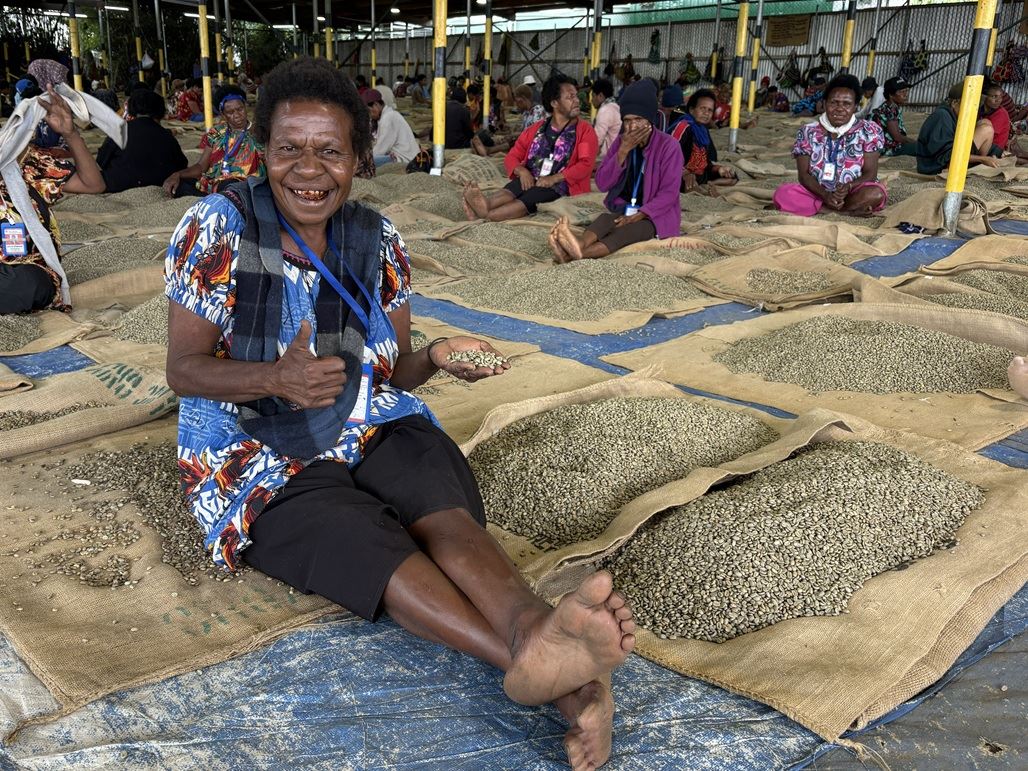
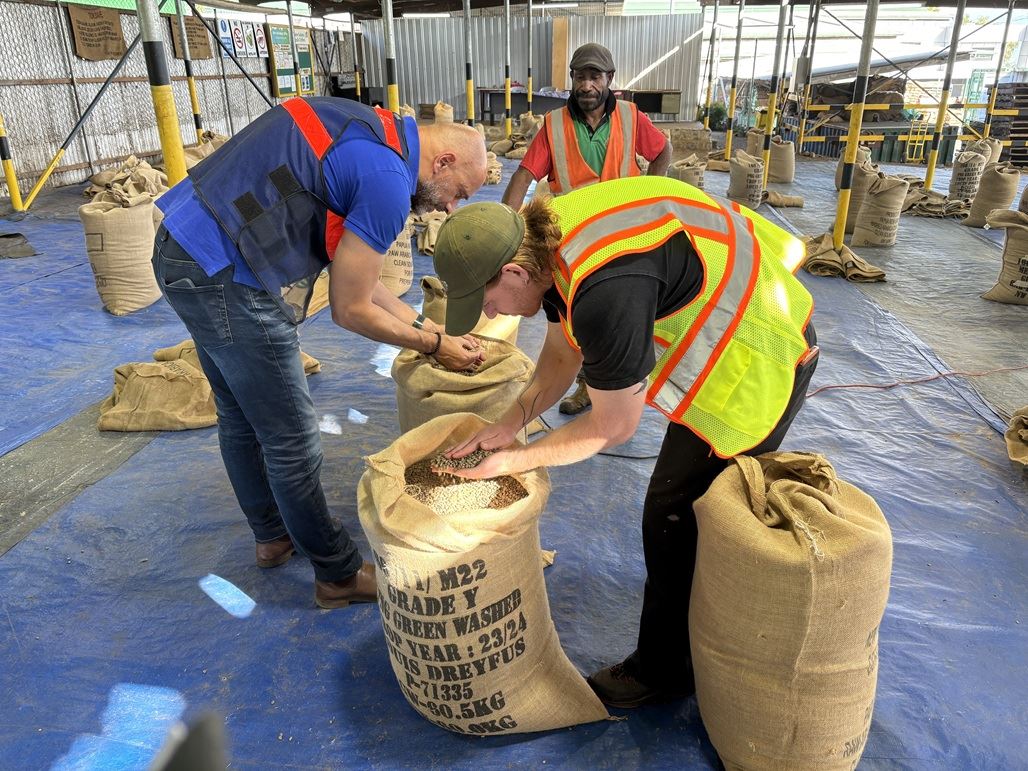
Aislinn at the Mt Hagen wet mill The trade history between Bennetts and Papua New Guinea goes back generations. When Scott Bennett’s father, Bill, started buying tea from Papua New Guinea at the end of the 1960s, the country was still an Australian-administered territory. As part of the proposal to support economic development in the region, the Australian government mandated that at least 30% of coffee imports must be from Papua New Guinea, thereby creating a long and lasting affiliation between Papua New Guinean farmers and the Australian coffee drinker. At this time, most of PNG’s coffee was produced on large plantations, owned and managed by Australian landholders, or other foreign nationals. Following the country’s independence in 1975, many of these estates were abandoned or sold, and the coffee crop was reclaimed by the traditional landowners. Today, over 90% of PNG’s crop is produced by local small holder producers, who grow coffee as a cash crop on farms averaging just one hectare each. Typically, farmers will process their coffee to parchment stage, which is then transported to central dry mills or processing sites to be prepared for export. This system relies heavily on a network of local middlemen, who collect coffee from remote communities and deliver it to exporters. Often, these collectors share a cultural background with the coffee producers and can move safely within the communities, liaising between different parties and allowing for the free flow of coffee from the highlands to the port. Coffee that is collected as parchment falls under the umbrella of ‘Premium Smallholder Coffee’ (PSC) and is graded at the mill to produce ‘B’ or ‘Y’ lots. Alternatively, coffee may be delivered to centralised wet mills as fresh cherry, where it is processed with more sophisticated equipment and a higher level of oversight. These higher quality lots are commonly sold as ‘A’ grades, or ‘Plantation Coffee’. This historic terminology is still widely used in the industry, despite grading standards being updated in 2016 to reflect physical bean characteristics rather than supply stream. Once processed to parchment stage the coffee is prepared for export at a dry mill facility, which are typically owned and operated by the exporter. Here, the coffee is milled, screened for size and sorted for defects, either with a colour sorter or by hand. It is common practice to then blend lots to create A, B or Y grade profiles, distinct to that exporter. Good quality management at an export facility is critical in ensuring consistency year on year, and a key factor in how Bennetts chooses our supply partners. Hand sorting at the NGHCE dry mill in Goroka Julian inspecting the hand sorted coffee before export Coffee is an important agricultural export for Papua New Guinea, although there is less of a cultural attachment to the crop than is found in Central or South America. Here, producers are pragmatic and approach coffee as a business first - if the price is not favourable, they preference other crops or alternative income opportunities. When the market is high, Papua New Guinean producers do well from their coffee crop, often receiving 70-80% of the NY C-price. The focus here is firmly on commercial production, and traceability usually stops at the mill level. While specialty grade micro lots can be found from Papua New Guinea, they are only a very small part of the industry and can be inconsistent or difficult to secure year on year. Coffee farming in PNG does not come without its challenges. Julian and Aislinn learnt that most trees are some 50-60 years old now, and a lack of pruning, inputs or regeneration techniques has resulted in decreasing yields year on year. Rising costs, labour shortages, an ageing population and a declining interest from younger people are also considerations in the future of Papua New Guinean coffee production (this is also true for many other producing origins worldwide). Perhaps most significantly, in recent years coffee berry borer beetle (CBB) has reached the highlands, devastating higher grown crops and posing a significant threat to the industry. This pest burrows into the seed of the coffee cherry and eats from inside out, materially reducing yields and affecting the cherry to green bean conversion negatively. In the past, it was normal to produce 1kg of export quality green beans from 6-7kg of fresh cherry. Today, that ratio is closer to 9-10kg, or as high as 12kg for premium lots. This shift has a huge flow on effect in terms of coffee supply and pricing and is still being adjusted to across the coffee sector. During their time on the ground, the team was fortunate to visit a small village of coffee farmers that contribute coffee to our organic offerings, where they were warmly welcomed with traditional song and dance. Organic certification continues to be relevant for Papua New Guinea, particularly for small holder producers who benefit greatly from the added premiums. Our supply partners also reported that the buyers’ expectations for social and sustainability compliance are evolving, and many have developed stronger frameworks for traceability, labour management and socially and environmentally responsible practices to meet changing requirements. While in Goroka, Julian and Aislinn also visited the headquarters of the Coffee Industry Corporation’s (CIC), a government funded body that ensures quality standards are met for coffee exports and manages projects to better resource farmers. Here, they learnt that the World Bank has recently invested USD $1.2 billion into a 6-year partnership with Papua New Guinea to improve agricultural systems, create more jobs and support better living conditions for all Papua New Guineans. As part of this initiative, we expect to see greater investment in regional processing infrastructure, allowing farmers to sell their coffee cherry more directly and access better income for their crop. This year saw a slow start to the season and during Julian and Aislinn’s early May visit there was high demand for both cherry and parchment and attractive prices were being offered for both. As we write this report in mid-June, the coffee harvest is around 40% completed and the overall flow has improved, with above average coffee volumes delivered from mid-May onwards. Farmgate prices for cherry and parchment have settled in response, however, they have not followed the sharp drop in the NY C-market sufficiently, meaning differentials are still relatively high. Despite this, Papua New Guinea remains a key strategic origin for Australian coffee roasters. Offering a wide range of cup profiles within Y to A grades, Papua New Guinean coffees are ideal for blending or other applications and present great commercial value. The country’s close proximity allows for speedy delivery windows (particularly in comparison to American or African supply streams) and cost efficient freighting options. For our roasting partners, we recommend communicating your requirements early in the season, so our team can effectively navigate seasonal considerations and secure you the most advantageous pricing for your preferred qualities. At Bennetts, we have prioritised working with suppliers who have strong quality systems at their export facilities, established grower networks and the logistical and administrative capabilities to meet certification requirements and facilitate fast shipments. Our recent trip presented a great opportunity to investigate and advance our current sourcing program, and our team came away with great confidence in our supply partnerships and a better understanding of Papua New Guinea’s unique coffee sector. |



Neotek default product cap in black
1234
1234Neotek was the brain child of Jerome Howard and formed in late 2001 to create intuitive, efficient, integrated B2B eCommerce websites
Total price:
$159.99We offer free shipping anywhere in New Zealand. A skilled delivery team will bring the parcels into your office.
If you're not satisfied, return it for a full refund. We'll take care of disassembly and return shipping.

Need Help?Contact now